In OpenQA one has often to check the output of a command. Now most of us think foremost “this is a task for my beloved grep”:
echo "Command runs successfully" | grep "successfully"
This works and is also common but it has one major problem: In the error case it doesn’t show the actual output. It swallows the input and doesn’t show anything.
Luckily openQA has a internal routine validate_script_output which handles this
case. The main advantage of validate_script_output over a typical assert_script_run("... | grep ...") is that
it shows both the actual and the expected output. This makes debugging and job investigation easier for a reviewer
(man and artificial construct alike) as one has not to guess or find workarounds to show the actual output. It is already there:
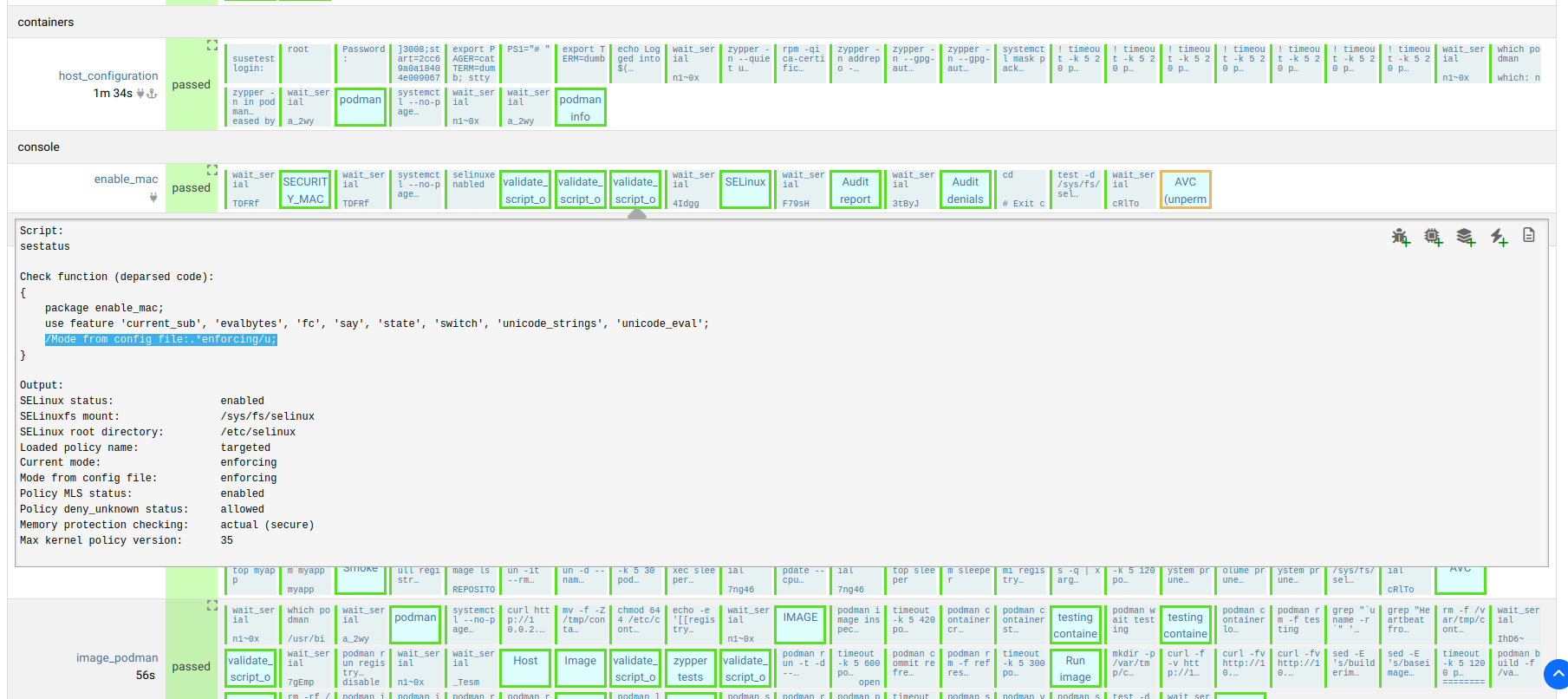
Here one can see the deparsed code of what openQA tries to match:
/Mode from config file:.*enforcing/u;
Versus the actual Output what the command gives:
Output:
SELinux status:                 enabled
SELinuxfs mount:                /sys/fs/selinux
SELinux root directory:         /etc/selinux
Loaded policy name:             targeted
Current mode:                   enforcing
Mode from config file:          enforcing
Policy MLS status:              enabled
Policy deny_unknown status:     allowed
Memory protection checking:     actual (secure)
Max kernel policy version:      35
TLDR
Using validate_script_output shows the actual output and the expected pattern directly
in openQA is thus typically the better choice than a assert_script_run("... | grep ...").